
VO₂max
VO₂max 是你的身體在全力以赴的一分鐘裡最多能使用的氧氣量,是衡量心臟、肺和肌肉合作得多好的指標。醫師在意它,是因為在大型研究中,人的體能越好,死亡風險越低,差距可與吸菸相比。
什麼是 VO₂max?
全力以赴的一分鐘裡,你的身體最多能使用的氧氣量。它是你有氧體能的天花板。
1920 年代初期,生理學家 A.V. Hill 繞著一條 85 公尺長的草地跑道奔跑,同時測量他呼吸的氧氣。隨著他加速,他的耗氧量上升,然後就不再上升。Hill 寫道,無論他超過那個極限後跑得多快,他的攝氧量都無法再增加。他和同事把它稱為最大攝氧量。1,2
這個極限就是 VO₂max:你一分鐘內最多能吸入並使用的氧氣量。為了比較不同體型的人,這個分數通常以每公斤體重來表示,單位是每分鐘的氧氣毫升數。實驗室用跑步機或腳踏車測試來測量,強度逐漸增加到你無法繼續,同時用氣體分析儀測量你的呼吸。3,4
什麼決定你的 VO₂max?
有一篇回顧主張,主要是心臟輸送多少氧氣給肌肉。訓練會提高它,但不同人提高的幅度差異很大。
氧氣要走很長的路:從空氣到肺,進入血液,經過心臟,再進入燃燒它的肌肉。想像一個只有一條路通進來的小鎮。工坊可以用得更多,但每分鐘只有那麼多卡車抵達。一篇回顧主張,限制在於輸送,而不是肌肉自己從血液中取氧的能力。它提出三個理由。改變供應,用血液興奮劑、稀薄的空氣,或讓心跳變慢的藥物,會改變分數。訓練提高它,主要是提高心臟一分鐘最多能打出的血量。而一塊血液充足的小肌肉,可以以非常高的速率使用氧氣。5
訓練能把它提高多少,差異極大。在 HERITAGE 研究中,481 位不運動的成人進行了同樣的 20 週自行車訓練計畫。平均來說,他們的分數每分鐘增加約 400 毫升。有些人幾乎沒有進步,有些人則增加了超過一公升。6
所以朋友用同樣的方式訓練、進步得更多,並不能證明你做錯了。這項研究的最佳估計是,反應差異中最多有 47% 是遺傳的。那描述的是族群,不是任何一個人,而且裡面的每一個人都是白人。6
對跑者來說,高的天花板並不是全部。Paula Radcliffe 曾保持女子馬拉松世界紀錄,從十幾歲後期到 29 歲,她的分數約 70。在那幾年裡,她維持穩定配速所需的氧氣量下降了 15%。5,7
年齡如何改變它?
它隨年齡下降,而且每個後來的十年,下降都加快。
你落在哪裡?在對數千位沒有心臟病的美國成人所做的實驗室測試中,典型的 20 多歲男性分數約 48,典型的女性約 38。到了 70 多歲,兩者都失去了約一半,大約是每十年下降 10%。接受實驗室測試的人,並不是這個國家的隨機樣本。3
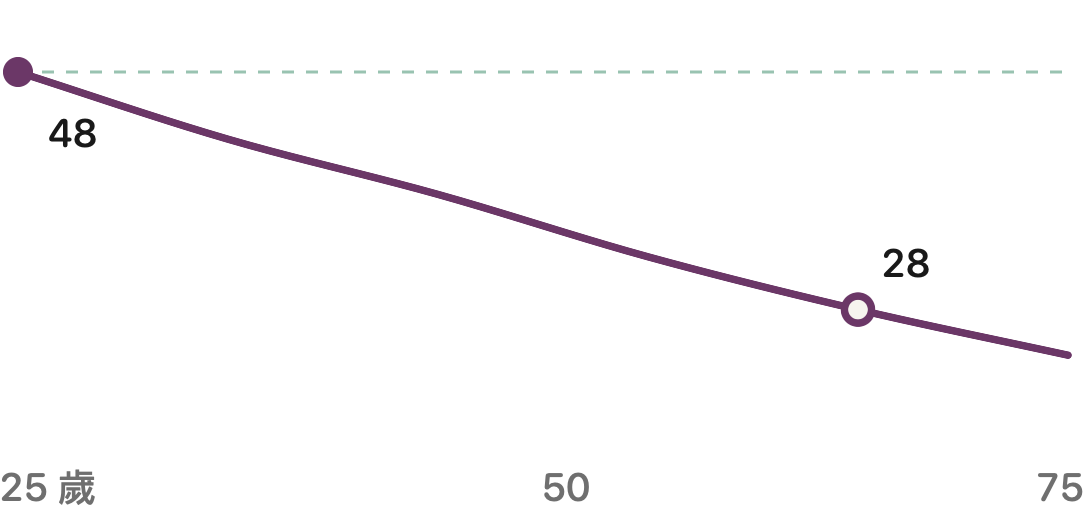
追蹤同一群人,顯示下降在加速。在 810 位約每八年重新測試的健康成人中,20 多歲和 30 多歲時,分數每十年下降 3 到 6%。到了 70 多歲及以後,不管他們自稱多活躍,每十年下降超過 20%。8
1966 年,五位 20 歲的健康男性為了一項研究臥床三週。四十年後,同樣這些人再次接受測試。他們的總耗氧量比當時下降了約四分之一,與當年臥床三週之後差不多。那只是來自同一個實驗室的五個人,所以顯示的是可能發生什麼,不是多常發生。9,10
到了晚年,這個分數開始決定日常的事。一篇簡短的回顧判斷,失去獨立生活能力的可能,在男性約低於 18、女性約低於 15 時出現,通常在 80 到 85 歲達到這個程度。11
醫師為什麼在意?
在大型研究中,人的體能越好,死亡風險越低。這個差距可與吸菸和糖尿病相比。
Cleveland Clinic 用一台越來越快、越來越陡的跑步機測試體能,直到受測者必須停下來。2018 年,那裡的一個團隊回頭查閱了 122,007 位被轉介來測試的成人的紀錄。他們依體能相對於同年齡同性別的其他人,分成五組,然後在中位數 8.4 年中計算死亡人數。12
體能最差的一組,死亡風險約是頂尖組,也就是體能最好的前幾個百分比,的五倍,這是在校正其他風險因素之後。頂尖組甚至比下一級的組別表現更好,風險約低四分之一。從高於平均降到低於平均,風險增加 41%,與吸菸和糖尿病差不多。這些是風險的比例,不是多出的死亡人數。12
一項彙整 33 項研究的分析,早已發現同樣的模式。體能每上升一級,大約相當於每小時多跑一公里的進步,死亡風險就降低 13%。13
你可能以為,益處會有到頭的一天。在 750,302 位美國退伍軍人中,體能最差的五分之一,風險是體能極佳者的四倍。體能極佳者在最高端,並沒有出現風險上升。這群人大多是男性,但其中有 45,232 位是女性。14
2016 年,美國心臟協會主張把體能當作生命徵象來看待。它的聲明稱,低體能可能是比吸菸、高血壓、高膽固醇或第 2 型糖尿病更強的死亡預測因子。15
這一切都是觀察性的:這些研究是觀察人,並沒有指派體能。體能好的人在其他方面也有不同,而且 Cleveland 的患者是被轉介來測試的,所以不是一般大眾的隨機切片。體能是由跑步機的表現估計的,不是從量測的氧氣得來的。12,13
你能提高它嗎?這會改變機率嗎?
訓練讓它提高,即使是 100 歲以上的男性。體能變好的男性,死亡風險較低,不過這不是證明。
同樣那五位 Dallas 的男性,在中年時訓練了六個月。他們的總耗氧量上升了 14%,回到 20 歲時的水準。以每公斤計算則仍然較低,因為他們變重了。沒有一位男性追上自己幾十年前訓練後的高峰。在他們身上,進步來自肌肉攝取更多氧氣,不是打出更多血液,所以輸送可能不是全部的故事。9,10,16
一位創下 100 歲以上騎士一小時紀錄的自行車手,訓練了兩年,大多是輕鬆騎乘,加上一些吃力的訓練,把他的分數提高了 13%。103 歲時,他多騎了 11% 的距離。他是一位特殊的個案,所以顯示的是可能做到的事,不是典型的情況。17
機率比較難證明。在 9,777 位相隔約五年接受兩次健康檢查的男性中,有些人從不健康變成健康。他們的死亡風險比一直不健康的男性低 44%。那是風險的比例,而且體能變好的男性,也可能改變了其他習慣。18
這對你有什麼用?
規律的有氧活動能提高它。手錶的估計值只是粗略的參考。
參考資料
這篇文章中的每個數字,都來自這些研究。核對日期:2026年11月12日。
- Hill AV, Lupton H (1923). Muscular exercise, lactic acid, and the supply and utilization of oxygen. QJM. doi:10.1093/qjmed/os-16.62.135
- Bassett DR Jr (2002). Scientific contributions of A. V. Hill: exercise physiology pioneer. Journal of Applied Physiology. doi:10.1152/japplphysiol.01246.2001 · PubMed
- Kaminsky LA, Arena R, Myers J (2015). Reference standards for cardiorespiratory fitness measured with cardiopulmonary exercise testing: data from the Fitness Registry and the Importance of Exercise National Database. Mayo Clinic Proceedings. doi:10.1016/j.mayocp.2015.07.026 · PubMed
- Caserman P, Yum S, Gobel S, Reif A, Matura S (2024). Assessing the accuracy of smartwatch-based estimation of maximum oxygen uptake using the Apple Watch Series 7: validation study. JMIR Biomedical Engineering. doi:10.2196/59459 · PubMed
- Bassett DR Jr, Howley ET (2000). Limiting factors for maximum oxygen uptake and determinants of endurance performance. Medicine and Science in Sports and Exercise. doi:10.1097/00005768-200001000-00012 · PubMed
- Bouchard C, An P, Rice T, et al. (1999). Familial aggregation of VO2max response to exercise training: results from the HERITAGE Family Study. Journal of Applied Physiology. doi:10.1152/jappl.1999.87.3.1003 · PubMed
- Jones AM (2006). The physiology of the world record holder for the women's marathon. International Journal of Sports Science and Coaching. doi:10.1260/174795406777641258
- Fleg JL, Morrell CH, Bos AG, et al. (2005). Accelerated longitudinal decline of aerobic capacity in healthy older adults. Circulation. doi:10.1161/CIRCULATIONAHA.105.545459 · PubMed
- McGavock JM, Hastings JL, Snell PG, et al. (2009). A forty-year follow-up of the Dallas Bed Rest and Training study: the effect of age on the cardiovascular response to exercise in men. Journals of Gerontology Series A. doi:10.1093/gerona/gln025 · PubMed
- McGuire DK, Levine BD, Williamson JW, et al. (2001). A 30-year follow-up of the Dallas Bedrest and Training Study: I. Effect of age on the cardiovascular response to exercise. Circulation. PubMed
- Shephard RJ (2009). Maximal oxygen intake and independence in old age. British Journal of Sports Medicine. doi:10.1136/bjsm.2007.044800 · PubMed
- Mandsager K, Harb S, Cremer P, Phelan D, Nissen SE, Jaber W (2018). Association of cardiorespiratory fitness with long-term mortality among adults undergoing exercise treadmill testing. JAMA Network Open. doi:10.1001/jamanetworkopen.2018.3605 · PubMed
- Kodama S, Saito K, Tanaka S, et al. (2009). Cardiorespiratory fitness as a quantitative predictor of all-cause mortality and cardiovascular events in healthy men and women: a meta-analysis. JAMA. doi:10.1001/jama.2009.681 · PubMed
- Kokkinos P, Faselis C, Samuel IBH, et al. (2022). Cardiorespiratory fitness and mortality risk across the spectra of age, race, and sex. Journal of the American College of Cardiology. doi:10.1016/j.jacc.2022.05.031 · PubMed
- Ross R, Blair SN, Arena R, et al. (2016). Importance of assessing cardiorespiratory fitness in clinical practice: a case for fitness as a clinical vital sign: a scientific statement from the American Heart Association. Circulation. doi:10.1161/CIR.0000000000000461 · PubMed
- McGuire DK, Levine BD, Williamson JW, et al. (2001). A 30-year follow-up of the Dallas Bedrest and Training Study: II. Effect of age on cardiovascular adaptation to exercise training. Circulation. PubMed
- Billat V, Dhonneur G, Mille-Hamard L, et al. (2017). Case studies in physiology: maximal oxygen consumption and performance in a centenarian cyclist. Journal of Applied Physiology. doi:10.1152/japplphysiol.00569.2016 · PubMed
- Blair SN, Kohl HW 3rd, Barlow CE, Paffenbarger RS Jr, Gibbons LW, Macera CA (1995). Changes in physical fitness and all-cause mortality: a prospective study of healthy and unhealthy men. JAMA. doi:10.1001/jama.1995.03520380029031 · PubMed
- Bull FC, Al-Ansari SS, Biddle S, et al. (2020). World Health Organization 2020 guidelines on physical activity and sedentary behaviour. British Journal of Sports Medicine. doi:10.1136/bjsports-2020-102955 · PubMed
- Lambe R, O'Grady B, Baldwin M, Doherty C (2025). Investigating the accuracy of Apple Watch VO2 max measurements: a validation study. PLoS One. doi:10.1371/journal.pone.0323741 · PubMed
- Lambe R, Schumann M, Donnelly L, et al. (2026). Accuracy of VO2 max estimates from Apple Watch Series 10. Mayo Clinic Proceedings: Digital Health. doi:10.1016/j.mcpdig.2026.100357 · PubMed